High-Level AI Integration with GoHighLevel: Boost Efficiency & Innovation
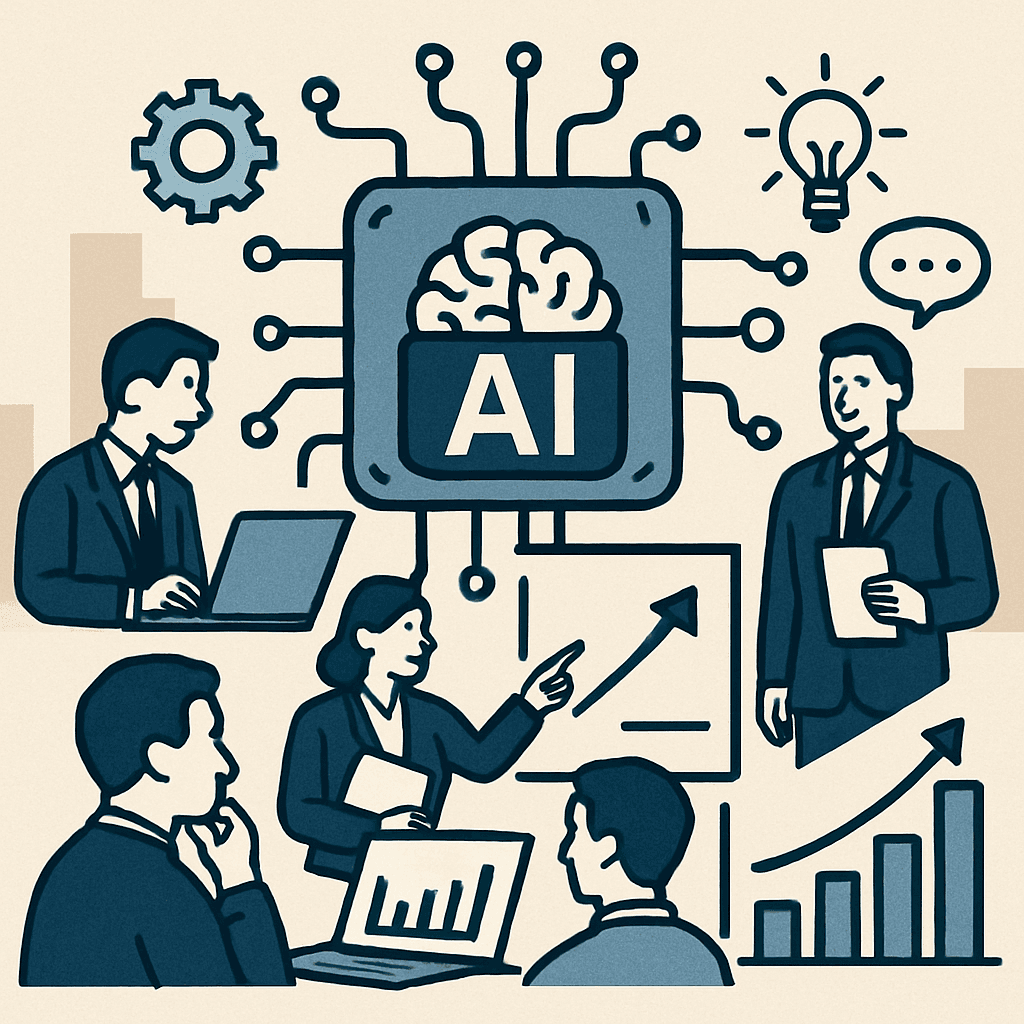
High-Level AI Integration with GoHighLevel: A Guide
High-level AI integration is transforming how businesses operate. It embeds advanced AI capabilities into existing systems through well-planned AI integration strategies and AI-driven solutions, enhancing functionality and efficiency.
GoHighLevel, a comprehensive platform, stands to gain significantly from high-level AI integration. It offers enhanced customer relationship management and marketing automation. When combined with intelligent automation and thoughtful AI system integration, GoHighLevel workflows become even more efficient for both SMBs and enterprise AI integration scenarios.
AI-driven solutions streamline operations, reduce costs, and improve decision-making. They allow businesses to focus on strategic initiatives by handling repetitive tasks.
Intelligent automation is key to this transformation. It frees up human resources for more strategic roles.
AI integration strategies must align with specific business needs and goals. Tailored approaches ensure successful implementation and maximize benefits.
This guide explores high-level AI integration with GoHighLevel. It provides insights into AI-driven solutions and intelligent automation, outlining AI integration strategies. It also serves as a practical AI implementation guide for teams planning AI system integration.
Understanding High-Level AI Integration
High-level AI integration involves embedding sophisticated AI capabilities into existing systems. This integration enhances functionality and efficiency significantly.
AI acts as a catalyst for innovation. It transforms static systems into dynamic, intelligent platforms. This change introduces advanced analytics, advanced AI solutions, and automation capabilities.

There are several key aspects to consider in AI integration:
- Data management for accurate AI-driven insights
- Infrastructure assessment to support AI capabilities
- Change management to ensure smooth adaptation
Understanding these elements aids in crafting effective AI system integration strategies.
By employing these strategies, businesses can achieve seamless integration. This enables them to capitalize on AI's full potential. In turn, it supports innovation and strategic growth across various sectors.
Why Integrate AI with GoHighLevel?
Integrating AI with GoHighLevel offers numerous strategic benefits. GoHighLevel is a powerful platform for customer relationship management. Combining it with AI amplifies its capabilities.
AI-driven solutions enhance customer engagement and marketing efforts. Automated data analysis helps businesses tailor marketing strategies effectively. This leads to improved customer experiences and increased conversion rates.
Key advantages of integrating AI with GoHighLevel include:
- Enhanced marketing automation capabilities
- Improved data-driven decision-making
- Increased operational efficiency
AI integration also fosters better customer relationships. By analyzing behavior patterns, businesses can offer personalized services. This personalization strengthens customer loyalty and satisfaction.
Overall, AI integration with GoHighLevel transforms business processes. It paves the way for innovative marketing and sales strategies. Such integration ensures companies stay competitive in a rapidly evolving market.
Key Benefits of AI-Driven Solutions in Business
AI-driven solutions significantly enhance business operations. They streamline workflows and reduce operational costs. This efficiency enables businesses to allocate resources wisely.
Intelligent automation empowers employees by handling routine tasks. It frees up their time for strategic initiatives. Such automation improves productivity across the board.
AI solutions also improve decision-making processes. They provide data-driven insights that are more accurate and timely. This leads to better-informed choices and strategic planning.
Businesses experience competitive advantages through AI. Personalized customer interactions result in higher satisfaction. Tailored marketing efforts increase conversion rates, boosting profitability.
Some specific benefits of AI-driven solutions include:
- Enhanced predictive analytics
- Improved customer support via chatbots
- Expedited data processing and analytics
By utilizing AI, organizations can innovate effectively. This fosters a culture of continuous improvement and adaptation. Ultimately, AI-driven solutions unlock new growth opportunities.
AI Integration Strategies for GoHighLevel
Integrating AI with GoHighLevel requires a tailored approach. Use this AI implementation guide as a practical starting point. Each business must consider its unique needs and goals. A one-size-fits-all strategy is ineffective.
Start by assessing your current infrastructure. Understand where AI can fit within your existing systems. This analysis helps identify the areas needing enhancement.
It's crucial to collaborate with stakeholders. Engage IT teams and business units in discussions. Their input is vital for successful AI integration.
Develop a comprehensive plan for integration. Include clear objectives and timelines. Define metrics to measure success accurately. These AI integration strategies can support advanced AI solutions without disrupting core operations.
Two important lists for AI strategy include:
- Technical assessments:
- System compatibility
- Infrastructure scalability
- Data management needs
- Organizational needs:
- Stakeholder alignment
- Change management processes
- Employee training programs
Testing and iteration are key. Implement AI solutions in phases to minimize disruption. Monitor each phase carefully, making adjustments as needed.
Finally, ensure continuous optimization. AI systems need regular updates and improvements. This ongoing refinement enhances performance and drives long-term success.
Intelligent Automation: Transforming Business Processes
Intelligent automation is revolutionizing how businesses operate. By leveraging AI, companies can streamline processes and increase efficiency. This transformation leads to cost savings and improved productivity.
AI-driven automation handles repetitive tasks with ease. This frees up employees to focus on strategic work. As a result, innovation and creativity flourish within the organization.
Key areas benefiting from intelligent automation include:
- Customer service
- Inventory management
- Financial reporting
Automation improves accuracy and consistency. Errors decrease, leading to higher quality outcomes. Companies can rely on AI for precise data handling and analysis.
Additionally, intelligent automation supports rapid scaling. Businesses can grow without a linear increase in resources. This scalability is crucial in today's dynamic market environment.
By embracing intelligent automation, companies position themselves for sustained success. The shift towards AI-driven processes is not just a trend but a necessary evolution in the business landscape.
Step-by-Step AI Implementation Guide
This AI implementation guide outlines a structured approach for success. A clear roadmap ensures that businesses integrate AI seamlessly into their systems.
First, identify the business objectives. Understanding goals helps align AI initiatives with overall strategy. This alignment is crucial for achieving desired outcomes.
Next, assess your existing infrastructure. Evaluate current systems to determine compatibility with new AI technologies. This step prevents unforeseen integration issues.
After infrastructure assessment, gather and prepare data. Data is the foundation of any AI application. Ensure that data is clean, accurate, and relevant for the AI system.
Create a plan, considering:
- Data sources
- Required hardware
- Software specifications
With the plan in place, choose the right AI technologies. Evaluate available solutions against your business needs and technical requirements.
Implement your AI solution, keeping in mind:
- Testing phase
- Employee training
- Feedback mechanisms
During deployment, continuous monitoring is vital. Track AI performance and make necessary adjustments. This adaptability is essential for maintaining efficacy.
Finally, conduct a thorough review post-implementation. Analyze results to measure success against initial objectives. This step provides insights for future AI projects.
Overcoming Challenges in AI System Integration
Integrating AI into existing systems poses unique challenges. Businesses must prepare for technical and organizational hurdles.
A major challenge is data management. AI systems rely on vast amounts of data, and ensuring data quality is critical. Clean, well-organized data leads to better AI performance.
Another hurdle is aligning AI with business goals. Successful integration requires clear communication between technical teams and business leaders. This alignment fosters a coherent strategy.
Common challenges include:
- Data privacy concerns
- Limited technical expertise
- Resistance to change
Addressing these issues involves investing in training programs. Employees need AI skills to operate and maintain new systems. Continuous learning adapts the workforce to AI advancements.
Lastly, create a culture of collaboration. Encourage open communication across departments to streamline integration efforts. A unified approach ensures AI systems enhance business operations effectively.
Enterprise AI Integration: Scaling for Growth
Enterprise AI integration offers significant growth potential. By embedding AI, businesses can scale efficiently and respond to market demands quicker.
With AI, enterprises can automate routine tasks, freeing resources for strategic goals. This automation increases productivity and reduces operational costs.
For successful scaling, consider these factors:
- Strategic alignment with business goals
- Adequate infrastructure for AI capabilities
- Training programs for staff
Enterprises should prioritize scalable AI solutions. Scalable systems adapt to changing needs and support expansion efforts. Also, ongoing monitoring of AI performance is critical for sustained success.
Incorporating AI at the enterprise level can lead to innovation. It opens doors for new business models and revenue streams. This helps maintain a competitive advantage in a rapidly evolving market landscape.
Advanced AI Solutions: Real-World Use Cases
Advanced AI solutions are transforming various industries through innovative applications. These solutions harness the power of machine learning and data analytics to drive decision-making.
In healthcare, AI assists in diagnosing diseases quicker with greater accuracy. This leads to improved patient outcomes and more efficient care.
In retail, AI personalizes shopping experiences. It analyzes customer data to suggest products tailored to individual preferences.
Consider these real-world AI applications:
- Predictive analytics in finance for risk management
- Automated customer service using chatbots
- Precision agriculture optimizing crop yields
These examples illustrate the diverse impact of AI. Businesses can leverage these applications to enhance performance. Embracing AI solutions enables companies to pioneer new methodologies and remain competitive in their fields.
Best Practices and Future Trends in AI Integration
Businesses aiming for successful AI integration should adopt certain best practices. Establishing clear objectives is crucial. This ensures alignment with business goals and facilitates measurable outcomes.
Moreover, collaboration between IT teams and departments enhances integration efforts. Cross-functional teams can drive AI solutions more effectively.
The future of AI integration involves:
- Continuous technological innovation
- Enhanced personalization in user experiences
- Expanding ethical considerations in AI use
Regularly refine your AI integration strategies to keep pace with evolving tools. Staying updated with these trends ensures businesses remain competitive. It also helps in adapting to market changes promptly. As AI continues to evolve, businesses must be proactive in embracing new advancements. Successful AI integration signifies not just technological adoption but also cultural transformation within organizations.
Conclusion: Unlocking the Power of High-Level AI and GoHighLevel
Integrating AI with GoHighLevel can significantly enhance business operations. It offers advanced capabilities that streamline processes and improve efficiency.
By adopting AI-driven solutions, businesses can gain a competitive advantage. Intelligent automation allows for improved decision-making and innovative strategies.
As AI technology evolves, businesses should remain open to change. Embracing high-level AI integration can lead to sustainable growth and long-term success. Whether piloting advanced AI solutions or planning enterprise AI integration, a measured approach to AI system integration sustains long-term value.
Frequently Asked Questions
Question: What does "high-level AI integration" mean, and why does it matter for GoHighLevel?
Short answer: High-level AI integration means embedding advanced AI capabilities---like analytics and intelligent automation directly into existing systems. For GoHighLevel, this turns its CRM and marketing automation into a more dynamic, data-driven platform. The result is smarter workflows, enhanced customer engagement, better decision-making, and greater operational efficiency, all aligned to business goals.
Question: How should a business get started integrating AI with GoHighLevel?
Short answer: Begin by defining clear business objectives and assessing your current infrastructure to see where AI best fits within existing GoHighLevel workflows. Prepare clean, relevant data; create a plan covering data sources, required hardware, and software; and select AI technologies that meet your needs. Implement in phases with testing, employee training, and feedback loops. Continuously monitor performance against defined metrics, then review results post-implementation to guide ongoing optimization.
Question: What tangible benefits can we expect from adding AI to GoHighLevel?
Short answer: You can expect stronger marketing automation, improved data-driven decisions, and higher operational efficiency. AI enables personalized customer interactions that boost satisfaction and conversion rates, supports predictive analytics, accelerates data processing, and enhances support via chatbots. Collectively, these gains reduce costs, free teams to focus on strategic work, and help maintain a competitive edge.
Question: What are common challenges in AI system integration, and how can we overcome them?
Short answer: Typical hurdles include data management and quality, aligning AI initiatives with business goals, data privacy concerns, limited technical expertise, and resistance to change. Address them by ensuring clean, well-organized data; establishing stakeholder alignment and clear objectives; investing in training and change management; deploying in phases with careful testing; and fostering cross-department collaboration with continuous monitoring and iteration.
Question: How does intelligent automation transform business processes, and where should we apply it first?
Short answer: Intelligent automation uses AI to handle repetitive tasks accurately and consistently, freeing employees for strategic work and enabling rapid scaling. Strong early candidates include customer service (e.g., routine inquiries), inventory management (e.g., demand-driven updates), and financial reporting (e.g., reconciliations and analytics). Applying automation here improves quality, reduces errors, and accelerates growth without a linear increase in resources.